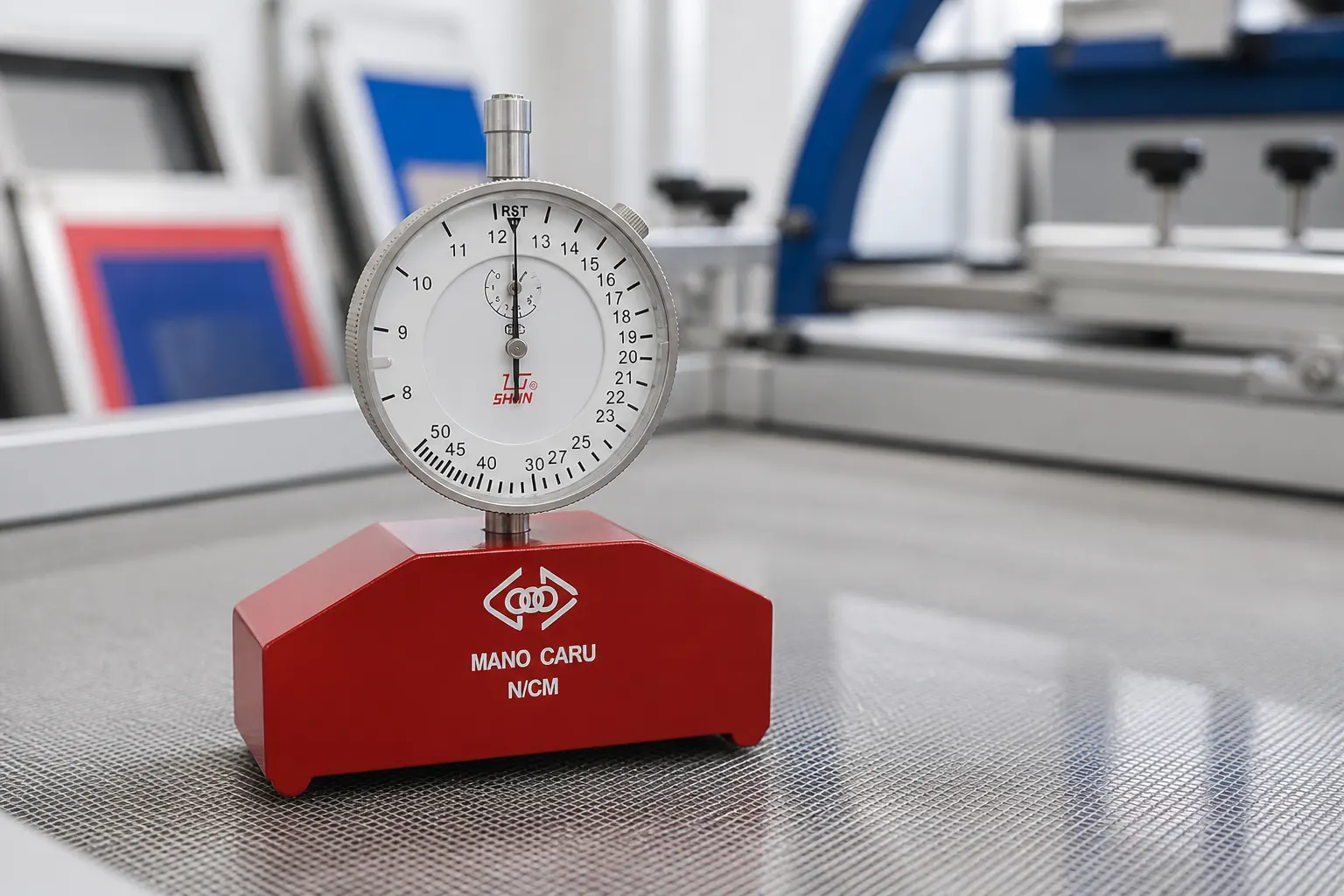
Short answer: When the same frame starts printing softer than last week, read it before you change the ink. The SHAN meter is a pointer dial from 8 to 50 N/cm. Rest it on the mesh, tap beside the foot, and let the pointer settle. Read the corners and the centre, then turn it and read the other direction. Write the lower number on the frame ticket. The dial says SHAN, Guilin, China, and the red base says N/cm.
Check category and range first
Use this meter on screen-printing mesh. The scale is 8–50 N/cm, which is the unit printed on the red base. Compare the reading with the figure already written on that frame, not with a number borrowed from a different mesh count.
The 8–50 N/cm dial covers the span printed on this model. Match it to the polyester mesh you stretch in this room. If your written targets sit inside that span, the pointer can show whether today's screen still agrees with the last one.
| Published item | Listing |
|---|---|
| Instrument type | Pointer-style mesh tension meter |
| Range | 8-50 N |
| Accuracy and resolution | Pointer dial, read on the bench |
Build a consistent bench routine
Keep one bench habit. Name the frame, check four corners and the centre, tap the mesh beside the foot, and wait for the pointer. Write warp, then turn the meter and write weft. The same pattern next week is what makes the two readings worth comparing.
Check tension while the mesh is being stretched, and check it again before a repeat job goes to press. The SHAN pointer gives the N/cm figure. The screen log is where you see the drop. You do not need a data cable. You need the same spots on the frame and the same direction of the dial.
- Confirm the frame identity and the shop's target unit.
- Use the same approved measurement positions each time.
- Record each reading with the frame and date.
- Escalate unexpected results under the shop's verification procedure.
Treat calibration as an unanswered requirement
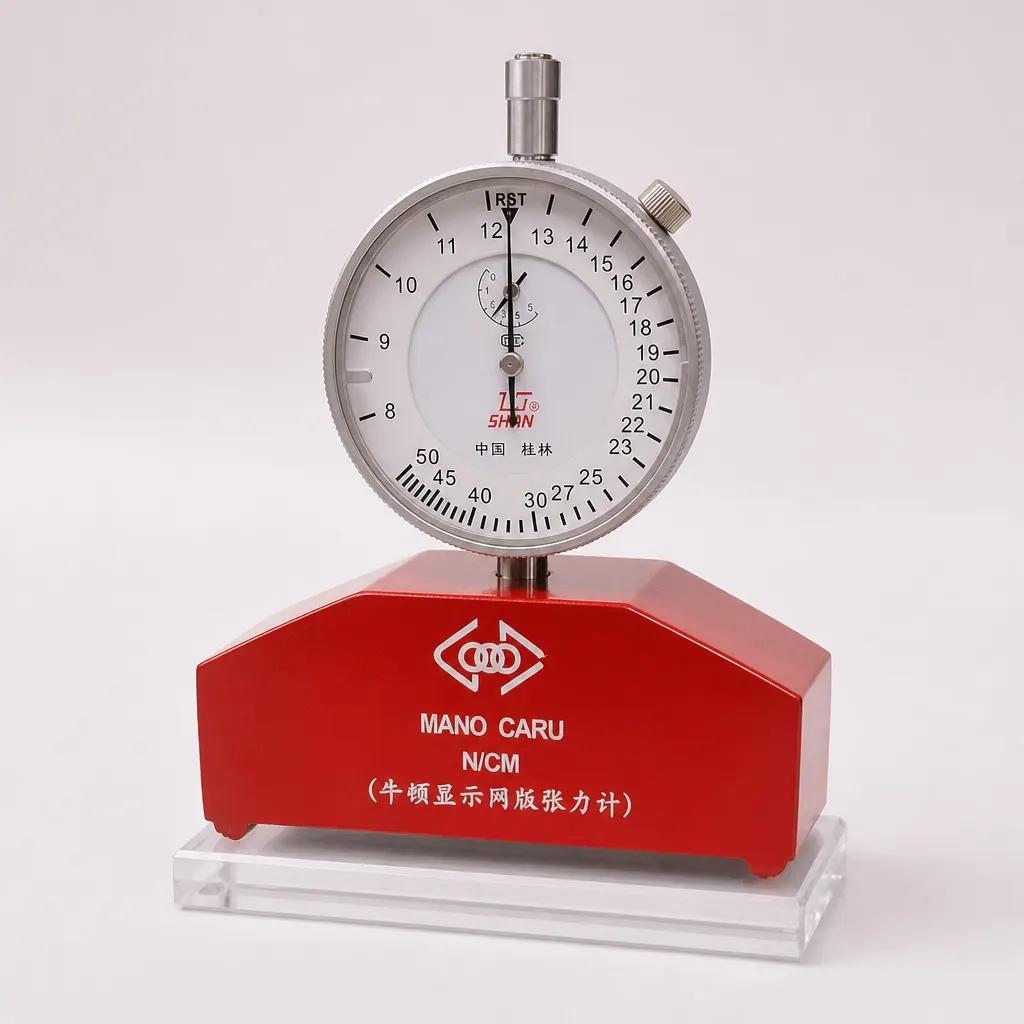
Precision on this model means the 8–50 N/cm silk-screen dial, the silk-screen dial you can read on the bench. The meter is supplied on its own. Read it, write the lower figure down, and compare that figure with the last good print on the same frame.
If a customer asks for a numbered mesh check, write the corner and centre readings next to the frame number and the date. That log is the record this mechanical gauge supports. Compare the frame with its own last good run.
Decide whether the physical format fits
What you handle on the bench is a red-based pointer gauge with a white dial. The base is marked N/cm. Set it on the mesh, tap beside the foot, and read. Store it where the dial stays visible and the foot stays clean, and keep it off the floor of the washout booth.
Pick this meter for silk-screen mesh when an 8–50 N/cm pointer is the reading you want in the log. It does the warp-and-weft check with no battery. If you need a steel-stencil meter, that is a different specification from this silk-screen model.
Related guides and product details
Buy it for the 8–50 N/cm pointer and the silk-screen job on the bench. Read the guide on what to verify before a repeat run, and the UK buying note on how to log warp and weft. The SHAN Screen Mesh Tension Meter, 8–50 N/cm product page uses the same dial and the same routine. On a reclaim day, check the frame after it is dry and before it is coated again. Wet mesh and a soft reading are easy to mix up, so let the screen drain and dry first. Write the date beside the lower N/cm figure. When two frames for the same four-colour job disagree, restretch the lower one so the colours still sit on each other. Keep the pointer gauge at the stretching table, not in a drawer across the room, or the check gets skipped when the press is waiting. Read the dial from straight above so you are not guessing between two marks. The 8–50 N/cm scale is the whole story on this model: silk screen, pointer, no battery. Read Screen Printing Mesh Tension Gauge: What to Verify for related guidance. Read Screen Printing Tension Meter UK Buying Checks for related guidance. Review the documented specification on the SHAN Screen Mesh Tension Meter, 8–50 N/cm product page before ordering.
Sources and safety context
- Supports the LW identity, pointer format, 8-50 N range, approximate dimensions and undocumented measurement specifications. SHAN screen mesh tension meter product page.
- Supports checking mesh tension during stretching and subsequent production stages without describing the LW model. SAATI: Mesh QC devices.