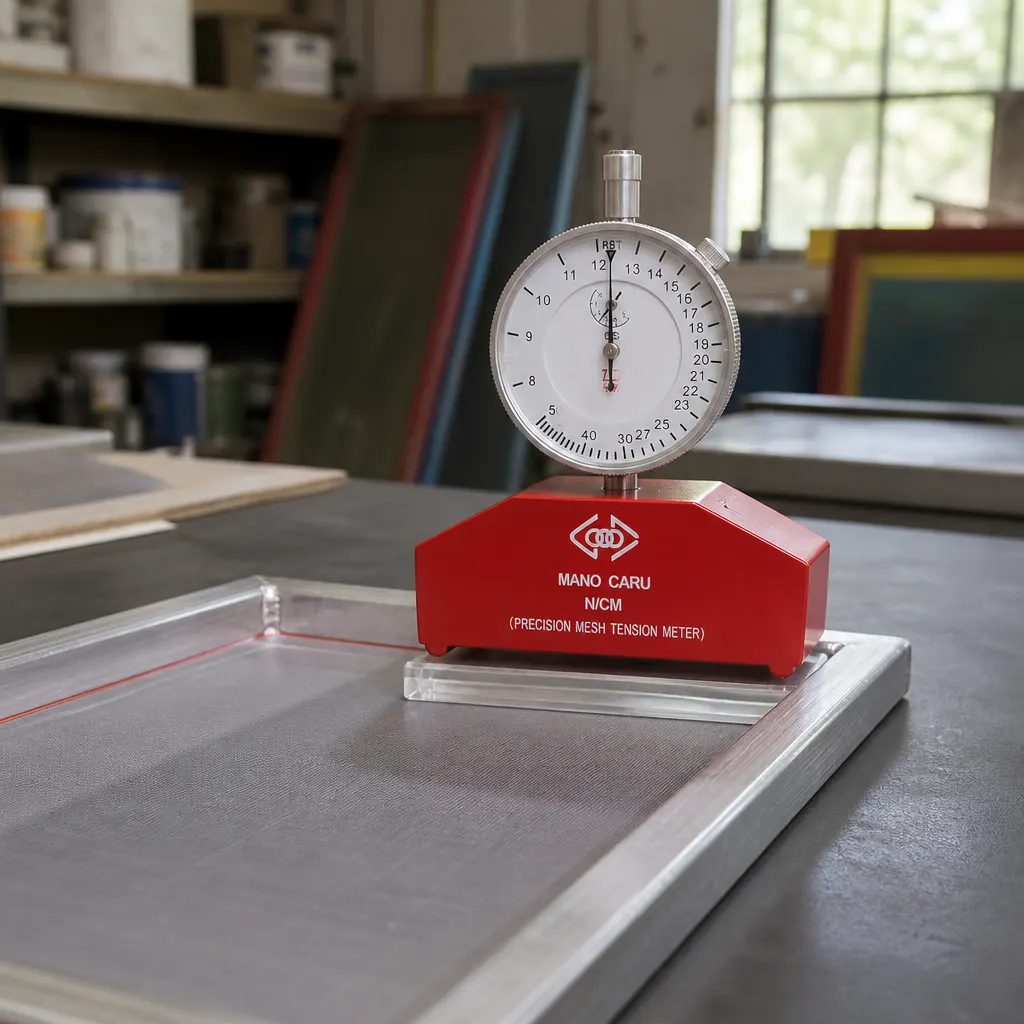
Short answer: Use the gauge as one step beside the frame number, the mesh count and the last good print. The SHAN meter reads 8–50 N/cm on a pointer. Place the frame flat, rest the meter on the mesh, tap beside the foot, and read when the pointer stops. Take the corners and the centre, then rotate for the other thread direction. File the lower number. One soft corner is a reason to look at that side of the frame.
Understand what the gauge can settle
A gauge can provide a number for the mesh at the point and under the conditions measured. It cannot, by itself, prove why registration, ink deposit or stencil behaviour changed because those outcomes involve other process variables.
This instrument is for screen-printing mesh. The pointer shows N/cm. It tells you the tension at the spot where the foot sits. Your press still needs a sharp stencil and even ink. The meter tells you whether the mesh is still in the range you printed well with last time.
| Question | Evidence available |
|---|---|
| Is it a screen-mesh meter? | Yes, according to the listing |
| What range is printed? | 8-50 N |
| How accurate is it? | Pointer dial, read on the bench |
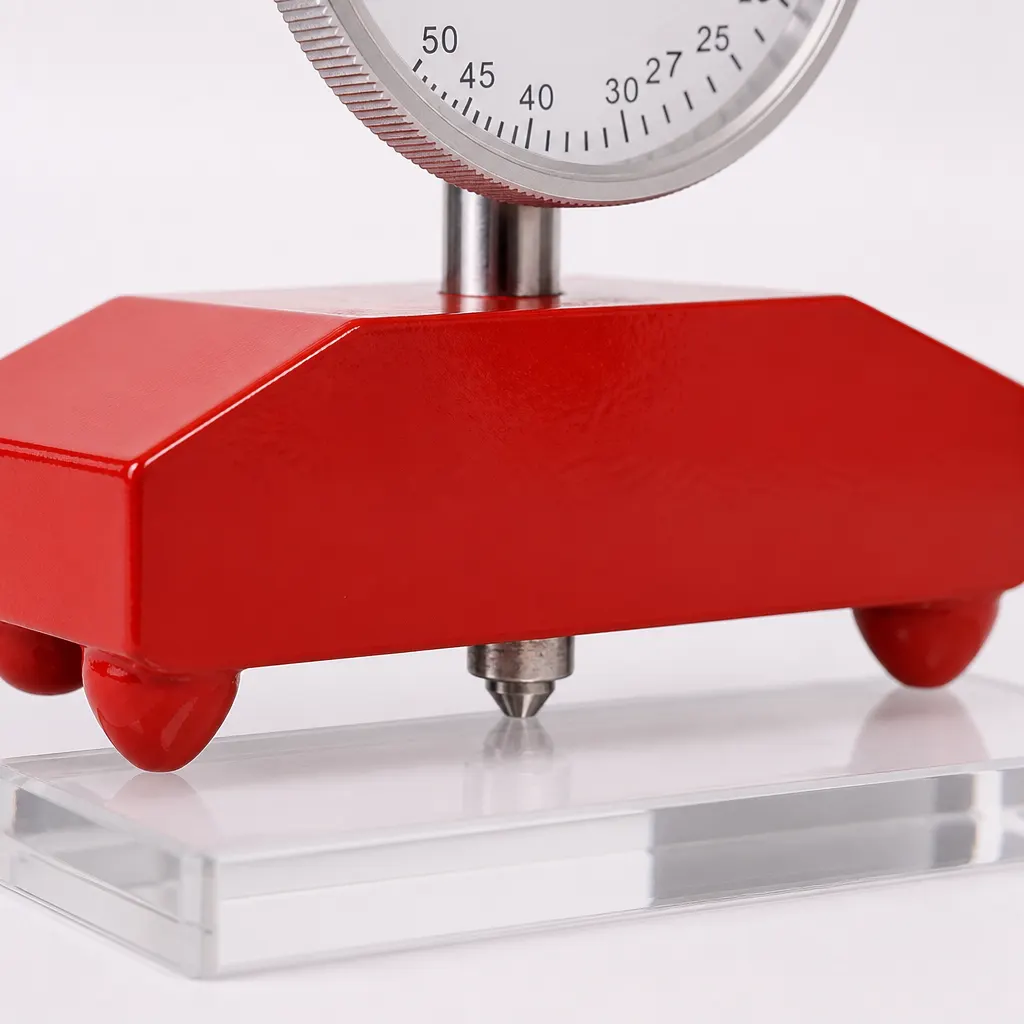
Compare readings under one method
Write the method once and keep it by the stretching frame. Frame number, four corners, centre, tap beside the foot, warp then weft, lower figure in the log. The SHAN dial is what you read. The ticket on the frame is what the next printer trusts.
Confirm tension when you stretch the mesh, and again before a repeat order. The pointer meter has no cable and no app. You schedule the check by putting it on the job ticket: reading taken, lower N/cm, initials. That is enough to see which frames have eased.
- Use the shop's approved unit and target source.
- Measure using the same documented pattern.
- Log results against a named frame.
- Investigate changes without assigning them automatically to one cause.
Separate checking from calibration
A familiar number means this frame still looks like the last good one on the same dial. The meter arrives as a mechanical gauge. A glass calibration plate is sold separately and is not in this box. Your comparison is frame to frame, using the same 8–50 N/cm dial.
Where measurement evidence matters, require the certificate, procedure or verification record named by the quality system. If none is available, keep the meter's role limited to the level of comparison your process permits.
Check range and bench fit before buying
The range printed for this model is 8–50 N/cm. Read it on the white dial and match it to the mesh counts you stretch most weeks. If your usual polyester screens sit inside that span, the pointer can show a drop before the print goes soft on press.
The meter is supplied on its own. There is no battery and no separate steel-mesh head in this model. You get the pointer gauge, you read N/cm, and you write the lower figure on the frame ticket. Our 12-month warranty covers the gauge you receive.
Related guides and product details
Use the SHAN gauge when the 8–50 N/cm scale matches the mesh on your frames and you will log warp and weft. Read the UK buying note and the screen-room check guide beside this one. The product page is the SHAN Screen Mesh Tension Meter, 8–50 N/cm. Build the log as a single line the press can read: frame number, mesh count, warp N/cm, weft N/cm, lower figure, initials. If the lower figure is down on a screen that printed cleanly last month, stop and re-tension before you reopen the film or change the ink. Check a new stretcher the same way you check an old wooden frame, so the log stays comparable. Leave the meter on the mesh only long enough to read it, then lift it clear before the frame is moved. A knocked pointer is a reason to read that spot again, not to average it away. Steel stencil work needs a different meter. This SHAN gauge stays with the silk-screen frames. Our 12-month warranty sits with the gauge itself. If the pointer sits between two marks, write the lower mark and say so on the ticket, so the next check uses the same habit. Read Screen Printing Tension Meter UK Buying Checks for related guidance. Read Screen Mesh Tension Gauge for Screen Printing for related guidance. Review the documented specification on the SHAN Screen Mesh Tension Meter, 8–50 N/cm product page before ordering.
Sources and safety context
- Supports product category, pointer format, range, dimensions and unknown measurement specifications. SHAN screen mesh tension meter product page.
- Supports checking mesh tension during stretching and later screen-production stages. SAATI: Mesh QC devices.